

Calvary in Nigeria
March 02 2026
|
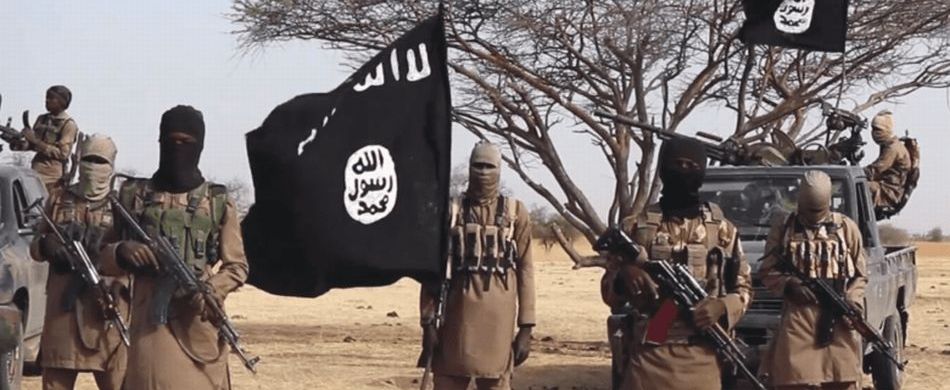
Boko Haram terrorists launched a major night attack on communities near Chibok in Borno State, Nigeria, on November 29, 2025
TOBIAS Yahaya woke in the middle of an April night in 2023 to hear men breaking into his property in Sokoto, a city in the extreme north west of Nigeria. Three individuals had scaled a high fence surrounding the compound of the house where he lived with his wife and four children aged between 8 and 3 years, and cut through coils of barbed wire. He saw them approaching his house.
“It was 3:00am. I knew they had come for something,” recalls Tobias, 27, when we met in the Jesuit Church of the Immaculate Conception in Mayfair, London.
“I have young children, small children, and I knew that if the men came inside it was going to be bad for the family, so I decided to go outside.”
There, a nearby neighbour, a Muslim called Ibrahim of about the same age, attacked him with a knife.
“There wasn’t any conversation between me and him,” says Tobias. “He brought out this knife and – bam! – he stuck it in my chest. I fell to the ground bleeding really seriously. Ibrahim’s accomplices fled, but he was still standing with the knife. I stood up and Ibrahim brought the knife for a second time, but I managed to hold the blade. He screwed it and I had to let go, but I dragged him close to my body and held him so he couldn’t stab me. We were struggling, standing up, and my wife came outside. She was screaming for help from neighbours who came to our house and Ibrahim was apprehended.
“It was a difficult moment for me, but thanks to God and the doctors I was fine,” he said, adding that had he been stabbed on the left side of his chest rather than the right the knife would have pierced his heart. The wound was so deep, he said, that a doctor was able to insert a finger up to the knuckle of the hand. Luckily, the knife missed major arteries.
Rude awakening
When Tobias awoke in hospital after surgery, he was horrified to see Ibrahim in the bed next to him. His attacker had been admitted for head injuries inflicted by neighbors who had come to the rescue.
Alone except for a police officer standing guard, the two men faced each other, and Tobias asked, “Why did you want to kill me?” It was largely rhetorical – he likely already knew the answer. Ibrahim was Muslim, while Tobias was not only a well-known local Catholic, but also a catechist, a layman with a valuable teaching, pastoral, and support role at the Cathedral of Holy Family in Sokoto.
“He didn’t talk to me,” Tobias says. “He looked at me and was shedding tears.”
Three months later, they met again in court, where Ibrahim was sentenced to just a year for attempted murder. Before a Muslim judge, Ibrahim confessed that he had intended to kill Tobias because he was Christian and a threat due to his ministry. What happened next shocked the court.
“I asked for permission to hold Ibrahim in court before he started his sentence,” Tobias recalls. “People’s faces showed disappointment, disbelief… Some Muslims asked why I would do that, and the judge asked what I wanted. I said, ‘I want to hug him.’”
“The judge said, ‘go ahead and hug him’ and I shook Ibrahim’s hand and told him I forgave him. He looked at me and he was in tears again.”
Tobias explains, “As a human being forgiveness is difficult – it’s not my fault I was attacked. But we are also Christians. We have to follow the teachings of Christianity. I consider Ibrahim to be a human being, and a human being who deserves love and forgiveness no matter what crimes he has committed against me. I may also need forgiveness from somebody someday.
“Especially because of the remorse on his face, it made it easier to think of forgiveness. I have also forgiven him because I want to free myself from hate. He then actually hugged me, and I could see from his reaction and his non-verbal communication and tears that it was an expression of remorse. This even led me to visit his mother twice while he was in jail, though I could not see him in prison.”
Dealing with trauma
By then, Tobias was having to care for his family. His wife was terrified of further attacks on their home, and his eldest daughter, who had seen her father bleeding heavily shortly after he was stabbed, was deeply traumatised by the experience.
His response was to take them 500 kilometres to a safer part of Nigeria to recuperate from their ordeal. But in conversations with his wife and his mother, Tobias reached the conclusion that it was God’s will that he should return to his ministry in Sokoto, where Muslims outnumber Christians by 9 to 1.
The family returned home and Tobias went back to work, conscious that he must always ‘be ready’ for violence while striving to establish good relations with his Muslim neighbours, whose children mix with his own.
He said that it is vital for all Christians in the area to take great care about what they say both publicly and privately, because trouble could come out of the blue.
He cited the 2022 lynching in Sokoto of Deborah Samuel Yakubu, a second-year Christian college student who praised Jesus for her good exam results and was stoned and burned with tires placed around her body. Only two Muslims were charged in connection with the murder with the very minor offence of “criminal conspiracy and creating a public disturbance,” but they were later acquitted.
Top of the list
In view of such evident danger to himself and other Christians in Sokoto, it is understandable that Tobias declined to comment on the political situation in Nigeria or discuss whether a persecution was in fact under way.
There is good grounds to conclude that there is. According to the Open Doors charity, Nigeria has moved from the 7th most dangerous country in the world for Christians in 2022 to the top of the list in 2024 after 3,100 people were killed and 2,830 kidnapped in that year.
When the death toll is counted for 2025, it is highly likely that Nigeria’s Christians will again emerge as the world’s most persecuted people, because throughout the year one massacre has been clearly followed by another. About 62,000 Christian civilians have been killed by Islamists since 2000, with numbers rocketing in the last decade thanks to high grade weaponry arriving from countries destabilised in the so-called ‘Arab Spring’.
The massacre at Yelewata in Benue State in June 2025 demonstrated what this persecution looks like on the ground.
On that occasion about 500 refugees – Christians who had fled Muslim violence from other parts of the country – were sleeping in undefended temporary accommodation when they were attacked by Fulani Islamist gunmen who set fire to the buildings and sprayed bullets inside as they screamed: “Allahu Akhbar!”
Those who tried to flee were shot and hacked to pieces. The massacre lasted for three hours and left 271 people dead.
President Trump
It was partly because of this attack that in November US President Donald Trump designated Nigeria as a “Country of Particular Concern” on the grounds that it engages in or tolerates “particularly severe violations of religious freedom.”
Writing on TruthSocial, President Trump said, “The United States cannot stand by while such atrocities are happening in Nigeria… we stand ready and willing and able to save our great Christian population around the world.”
The President concluded by threatening military action, which came without warning on December 26, little more than a month later. Acting with approval from the Nigerian government, the USS Paul Ignatius, a destroyer, fired more than a dozen Tomahawk missiles from the Gulf of Guinea at Islamic State training camps in a forest in the Sokoto state where Tobias and his family lives, killing “multiple” terrorists.
US Defense Secretary Pete Hegseth later explained that the strikes were necessary to stop the murder of Christians, while the Nigerian government preferred to say they were sanctioned to protect the general population.
Tobias himself did not call for such action. For him, it is enough to live each day by the Christian faith and to teach others to do the same by word, and especially by example.
Updated on March 02 2026