
God & I: Maria Benes
November 02 2026
|
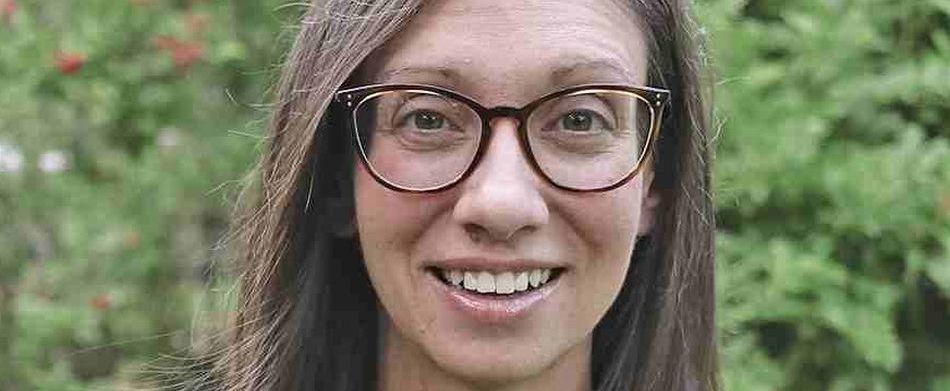
Maria believes only Christ can bring healing and unity to the United States
WHAT kind of religious formation did you receive as a child?
I was blessed to grow up in a family where my mother, who is of Italian heritage, was Catholic and introduced me to the faith. My first name, Maria, is after the Blessed Mother, and my middle name, Bernadette, honors St. Bernadette. Our Lady of Lourdes always held a special place in my mother’s heart.
My father is agnostic, and when I was in second grade my parents almost divorced because of their political and religious differences. By God’s grace, they stayed together, and that experience taught me a great deal about loving people who hold different beliefs. Now in his 80s, my father is discerning whether to become Catholic – a beautiful story of grace.
Was there a particular moment that deepened your faith?
During my freshman year at university, I travelled to Peru on a mission trip with the Fellowship of Catholic University Students.
At the time conversations with my father had left me wondering whether Catholicism was really true, so I prayed, “Lord, if you are real, show yourself to me.”
We spent time ministering among Indigenous communities in the Andes. One day our team set out on a mountain hike unprepared, with too little food and water, and many of us were exhausted. As we climbed, I prayed, “Lord, if you are truly here, please help us get home safely.” He answered that prayer, and for the first time I realized not only that God is real, but that He knows me personally and cares for me. From then on, my faith became deeply personal.
How has your academic background in political science and international affairs influenced your relationship with God?
It has had a profound influence on my faith. Political science naturally raises questions about justice, while international affairs has given me a deep appreciation for the universality of the Church. I love seeing how the same Mass is celebrated in countless languages and cultures throughout the world.
Studying politics has also taught me that no human system will ever establish perfect justice. That realization has strengthened my longing for heaven. Pope Leo XIV has reminded us that our Catholic faith should shape our political views – not the other way around.
My academic background in human rights also led me to co-found the Before Gethsemane Initiative with Chenele Shaw, a Black Catholic friend. Our mission is to promote racial reconciliation through the Church’s teaching on the dignity of every human person and help those who have suffered the wounds of racism to find healing in Christ.
Which experiences shaped you most during your youth ministry work?
Young people have always inspired me because they are asking life’s deepest questions: Why am I here? What is God calling me to do? I love walking with them during that time of discernment.
I was also blessed with wonderful mentors. One of them was Servant of God Michelle Duppong, who accompanied me for a year through the Fellowship of Catholic University Students. Before her death from cancer on Christmas Day 2015, she offered her suffering entirely for others. Her joyful acceptance of sacrifice left a lasting impression on me.
As an organizer of Eucharistic pilgrimages, what moments have moved you most?
One is the Eucharistic procession across San Francisco’s Golden Gate Bridge. Nearly 4,000 people followed Archbishop Cordileone as he carried the Blessed Sacrament across one of America’s most iconic landmarks.
However, the moments I treasure most are the personal encounters, like the one that took place last year in Los Angeles during the 2025 St. Katharine Drexel Route.
While our team served lunch, Brother Damiano, a Franciscan friar, and I remained with the Blessed Sacrament, inviting anyone who wished to pray. Most people politely declined. Then we met a man whom I will call Michael to protect his privacy.
He later returned and said, “Because you asked my name, I know you really care about me.” He shared his painful story: a difficult childhood, drug addiction, and two failed attempts to complete trade school. Preparing to try a third time, he had lost confidence in himself.
Again, we offered to pray with him, but he declined. As he prepared to leave, I felt prompted to say, “Michael, Jesus fell three times carrying his Cross, yet each time he got up again. You’re about to begin trade school for the third time. Don’t give up because Jesus hasn’t given up on you.” At those words, he burst into tears, and then said, “I’m ready for prayer now.”
We invited him into the van, where the Blessed Sacrament was reserved. After explaining our belief in Christ’s Real Presence, Michael placed his hands on the tabernacle while Brother Damiano and I prayed with him. Afterwards, Brother Damiano remarked how much he had changed. Earlier he had been angry and bitter; now his face reflected peace – even joy.
The 2026 pilgrimage is connected with the 250th anniversary of the United States. What spiritual message has it brought to America?
It has been a privilege to celebrate our nation’s 250th anniversary through the National Eucharistic Pilgrimage.
The United States is deeply divided, but I believe only Christ can bring the healing and unity our country needs. As a political scientist, I know no earthly government will ever be perfect or achieve complete justice this side of heaven. Even so, we must always strive to become better as individuals and as a nation.
Our country was founded on noble ideals, but much work remains. I hope this pilgrimage inspires us to pursue the justice, unity, and charity to which Christ calls us.
St. Frances Xavier Cabrini served as the patron saint of the 2026 route because she was the first American citizen to be canonized, and this year marks the eightieth anniversary of her canonization.
Organizing national pilgrimages must bring both great joy and many challenges. What gives you the strength to continue?
Prayer comes first. Remaining close to Christ in the Eucharist gives me the strength to persevere. Above all, I have learned to trust that God is in charge.
Perhaps the greatest lesson I have learned is that my identity does not depend on success. The Lord has taught me that my dignity comes from being His daughter, not from organizing a perfect event or meeting every expectation.
Who is God for you, personally?
God is my beloved. I have been overwhelmed by his love, and each day I want to love Him more deeply in return. What strikes me most is the intimacy He desires with each of us. I can be completely vulnerable before Him because He knows my heart better than I do.
One spiritual book that has deeply influenced me is Consoling the Heart of Jesus by Fr. Michael Gaitley. It taught me that we can unite our sufferings with Christ’s and accompany Him in carrying the Cross.
What does the Eucharist mean for you?
Everything. St. Clare of Assisi is my confirmation saint, and I have always loved the story of how she held up the Blessed Sacrament when soldiers threatened her convent, trusting that Christ would protect her sisters. Looking back, I like to think she was praying for me long before I began working with the National Eucharistic Congress and the National Eucharistic Pilgrimage.
People have asked me – especially during the clergy abuse scandals – whether I had ever considered leaving the Catholic Church. My answer has always been an unequivocal “No.” I cannot imagine turning away from Christ in the Eucharist. If those scandals have caused such pain, how much more must they wound his Sacred Heart?
As the mother of three children, how do you help them discover God?
Young people need to be gently encouraged, but also to see faith lived authentically. Some of the most beautiful moments in my children’s spiritual lives have come from choices they have made freely – wanting to begin a new devotion or making a small sacrifice for God. Those decisions have not come because my husband or I told them what to do, but because they have seen us trying to live our faith. We pray together every evening, and that simple habit has become the foundation of our home.
We also remember the baby we lost through miscarriage, often saying that we have a little saint praying for our family.
Do you have a devotion to St. Anthony?
The Saint of Padua has been part of our family for many years. He is one of our family’s six patron saints, and we pray for his intercession every evening.
My mother’s family is almost entirely Italian, while my father spent a year carrying out scientific research in Pavia and became familiar with Padua during that time. My mother-in-law also has a deep devotion to St. Anthony and encouraged my husband and me to pray to him regularly. My husband and I asked him to help us find jobs – and he did!
DIRECTOR of Pilgrimages for the National Eucharistic Congress, Maria Benes previously led the 2024 Serra and Marian routes of the first National Eucharistic Pilgrimage with Modern Catholic Pilgrim. She is also co-founder of the Before Gethsemane Initiative, a Catholic nonprofit dedicated to racial reconciliation.
Maria holds a Ph.D. in political science from the University of Nebraska-Lincoln and a master’s degree in international affairs from The George Washington University. A former missionary with the Fellowship of Catholic University Students (FOCUS), high school youth minister and college instructor, she has taught human rights, international relations and public policy, helping students dialogue respectfully on policy issues that can be controversial.
Maria and her husband have three children, including their baby saint in heaven, and live in Lincoln, Nebraska.
Updated on October 28 2026