Stoves of Hope
February 23 2026
|
New stoves and ovens for Goma
IN THE crowded neighborhoods of Katoyi and Ndosho, on the outskirts of Goma – close to the border with Rwanda – in the Democratic Republic of the Congo, family life has long been lived on the edge. Many households fled here to escape from fighting or from the Nyiragongo volcano eruption in 2021, finding, however, poor housing and little work.
It was here, in the Diocese of Goma, that AVSI – an international non-profit organization – launched a project to improve the well-being of children and their families. The initiative set out to strengthen some of the most vulnerable households in Katoyi and Ndosho, making them more resilient economically, socially, and environmentally.
The wider context is equally fragile. The Democratic Republic of the Congo is rich in natural resources, but has been marked by decades of instability and repeated wars, especially in the east, forcing many people to flee their homes. In Katoyi and Ndosho many lacked reliable access to electricity and clean water, and lived with overstretched schools and health centers. The 2021 eruption of Mount Nyiragongo destroyed homes and livelihoods, adding another layer of trauma and poverty. “The lives of Congolese children and families are marked by deep poverty,” says Lorenzo Timpone, AVSI DR Congo representative. “This has worsened in the last ten years as a result of the deterioration of the security situation and the COVID-19 pandemic.”
Family empowerment
AVSI carries out development, cooperation and humanitarian aid projects in 41 countries, and has been present in the Democratic Republic of the Congo since 1973. “We support the local population in various sectors including child protection, education, health, nutrition, water and hygiene, agriculture, food security, and energy,” explains Timpone. For this project, AVSI worked closely with the parishes of Notre Dame d’Afrique in Katoyi and Saint François Xavier in Ndosho. “These neighborhoods are inhabited mainly by people displaced by war and affected by the eruption of the Nyiragongo volcano,” he continues.
The overall goal of the project was to improve the living conditions of children and their families. More specifically, it aimed to promote the socio-economic empowerment of families, enable parents to support their children’s education, and increase awareness of environmental issues. To do this, AVSI designed an integrated package of activities: the distribution of fuel-efficient improved stoves to reduce charcoal use and cooking costs; the creation and support of community savings-and-loan groups functioning as social solidarity funds; the provision of school kits to local schools; and medical support for particularly vulnerable people. “The aim was to promote a path of growth based on a process of empowerment for beneficiary families, making them protagonists of their own development, as well as more resilient socially and economically,” says AVSI’s Secretary General, Giampaolo Silvestri.
The total project budget amounted to €20,063.47. This covered the purchase of 220 stoves, training and awareness-raising on their use and on environmental issues generally, support for 19 savings-and-loan groups, school kits for four schools, and medical support for 20 people. St. Anthony’s Charities agreed to finance the stoves, the school kits and, if possible, the social solidarity funds – with an approved grant of €10,500. AVSI covered the remaining costs.
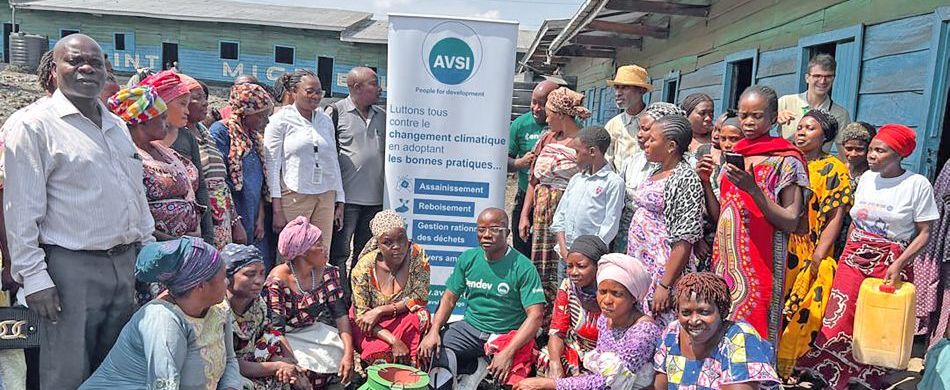
The first instalment from St. Anthony’s Charities arrived on 17 October 2024. In the last quarter of 2024, AVSI organized three focus-group sessions in Ndosho and Katoyi. During these meetings, co-facilitated by social workers and the kitchen staff of the EnDev energy programme, families discussed climate change, the role of households in protecting the environment and the advantages of cleaner cooking. At the end of these sessions, 160 families received an improved “Jiko Ngufu” stove to promote clean cooking and environmental protection.
Additionally, AVSI strengthened local Village Savings and Loan Associations. Nine groups with a total of 237 members received training on how to manage savings, issue small loans, and keep simple financial records. After an evaluation, each group was given an initial injection of capital to increase its lending capacity and support income-generating activities.
Dramatic change
In early 2025, Phase II was intended to extend these achievements with 60 more stoves and further support to AVEC groups. Then the situation changed dramatically. By mid-January 2025 the security situation in North Kivu had worsened sharply. Goma fell under the control of rebel forces and banking institutions were partially shut down. “From mid-January, the security situation in North Kivu province deteriorated, making it difficult to plan our activities,” explains Timpone. “The occupation of the city of Goma by M23 rebels led to the closure of banks, making access to funds difficult.” AVSI therefore asked for time to revise the project schedule, while continuing whatever activities were still feasible on the ground.
At the end of April 2025, Goma was still under rebel occupation, and the crisis was having serious consequences for the local socio-economic fabric, particularly affecting the income-generating activities of AVEC members. Nevertheless, awareness-raising on improved stoves and environmental protection continued, AVEC groups kept up their savings and lending with support from social workers, and children involved in the program continued to receive educational support.
Successful project
Despite the violence and uncertainty, the project was eventually completed in July 2025. In total, 220 fuel-efficient stoves were purchased and distributed to vulnerable families during four focus-group sessions – three in 2024 and one in 2025. Each session combined training on climate change and clean cooking with practical demonstrations, and every participating family took home a new stove.
By the end of the project, 19 savings-and-loan groups, bringing together 417 parents (including 340 women), had each received USD 500 in start-up capital. Combined with members’ weekly savings, this capital enabled the groups to issue rotating loans so that parents could invest in small businesses, buy stock for micro-trade, or pay for school and health expenses. Additionally, four schools in Katoyi and Ndosho received school and teaching materials, and 20 particularly vulnerable people obtained medical support through coverage of treatment costs. In total, the project’s direct beneficiaries included 220 families with approximately 940 children.
Even in the most bleak moments of early 2025, Lorenzo Timpone did not fail to express his gratitude. “We thank St. Anthony’s Charities and the readers of the Messenger of Saint Anthony for your understanding and precious support,” he concluded at the completion of the project.
Updated on February 24 2026